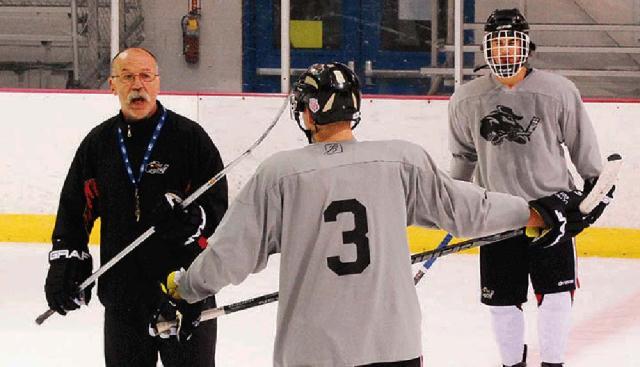
Playing or coaching professional hockey is a dream every hockey player thinks about growing up. Coach Harrison here has been able to live out that dream for over 40 years now from being drafted in the 3rd round by the St. Louis Blues all the way to being a scout for the San Jose Sharks to coaching some of the best prospects the game has yet to see.
(AlbuquerqueJournal.com)
Q: At what age did you start playing hockey? was hockey different from living Canada than living in the states? do you think that has more of impact on players careers growing up in a certain area as it did for you?
A: I started playing hockey at a young age, maybe around 4 or 5. My father wanted me to play the sport that every kid played in Canada, which was hockey. I actually never played in the states until I got drafted by the St. Louis Blue and started out in their minor league system so once you’re at that level of play, there isn’t much of difference on what country you are playing in at. I do believe growing up in Canada has a big benefit for kids throughout their development stage as it did for me and it defiantly helps impacts careers for hockey.
Q: When did you know that your hockey career was taking off and getting to the next level of play?
A: When I was about at peewee level (11-12-years old), I was at a much faster pace than a lot of the other kids through the league. My dad asked me to play at a higher level and I was pretty scared because I’m 11 years old playing against 13-14 years old kids who are massive over me. It turned out I was still at a whole another level of play and was outplaying those kids. I talked to my parents about how I could get better and maybe have a shot at the pro’s but I would have to move away. Once I was 16, I moved to Toronto, where I signed my first contract for a junior team the Toronto Marlboros. Once I was there, I kind of knew at 16 years old playing at the highest junior level, I had a good shot at making the NHL.
Q: You were known to be an enforcer on the ice. how much did that effect you on the ice and off the ice? As we see so less enforcer in the game of hockey today as the league doesn’t want them anymore.
A: When I first started, I really didn’t get into it much with other players. I think it really started when I was so young playing juniors but mostly I was young and trying to prove myself out there. I wasn’t fighting an insane amount at the beginning but when I was getting benched and scratched, I decided to start dropping the gloves a little more. It didn’t have an effect on me off the ice expect for couple injuries but nothing that cost me my career or life outside of hockey. I think if I was playing into todays type of game, I would be able to fit in much better as it is more my skill of play as in the speed and non-stop offense.
Q: When you got drafted, how did it feel?
A: Getting drafted is a feeling like no other, almost like getting a job you’ve always wanted and been chasing for. A lot of kids dream of getting drafted but I knew once I did get drafted, I still had a lot of work to do.
Q: what made you want to start a coaching career after you we’re done playing?
A: I was always a leader on every team I played for. I loved trying to help my teammates in anyway possible. My last year of hockey in Fort Worth, I was the old guy on the team, almost like the dad of the team. I was listed as the player coach and helped out running the team. Once I called it a career that year, I thought about it the coaching position I was offered by Fort Worth and try it out for a year and it turned out I was actually pretty good at it so I kept going at it. I stayed with Fort Worth till I got a job offer to be a scout for the San Jose Sharks in the NHL in 96. I only stuck with that for one year and went on coaching players at the junior level to help them develop their game for NHL readiness.
Q: coaching players who are well known in the NHL, what type of training and coaching did you go through that was different compared to coaching lower level guys?
A:Coaching guys like Mike Rupp (14 NHL seasons, 2 Stanley Cups, now host on NBCSN) and Tim Connolly (11 NHL seasons) were easy to coach because their skill level was already so high and all I had to do was work on the little things with them to make sure they could exceed at the NHL level. When I coach amateur players at a lower level like I did with you, it more working on the bigger part of what could be done better. A lot more coaching is put in for amateur type of players because it requires a lot more focus towards those type of players. Obviously, my goal was to get everyone to the NHL but that is impossible. The biggest difference between coaching players that are NHL level of play and players that are amateur level is prepping to be more maturate. NHL guys I’m trying to get them to be ready to competing at the game of hockey everyday and make sure they’re ready for that type of lifestyle. As for amateur players I was looking to make sure they ready for the real world after hockey.
Q: Traveling is a big part of professional sports. did your family move around with you everywhere you went or did you get apartments by yourself? how did it effect life with family?
A: From a young age I was traveling around the world and I got use to bouncing around to apartment to apartment. I met my wife playing juniors in Canada and she would come live with me while I still located in Canada. Once I moved to the states I was living with teammates when I was playing but once I started coaching, she decided to come live with me as it was more of stable position. Throughout the 10 teams I coached the wife and kids moved with me 6 times. As my coaching career was coming to an end, we decided to move back to my hometown in Canada and live the rest of life there. At time it was hard traveling all the time because I wasn’t able to see my wife and kids and other family members all the time but everyone knows that’s the price of having a family member being in professional sports. It just made our time we had together during breaks even better because we always cherished those moments.
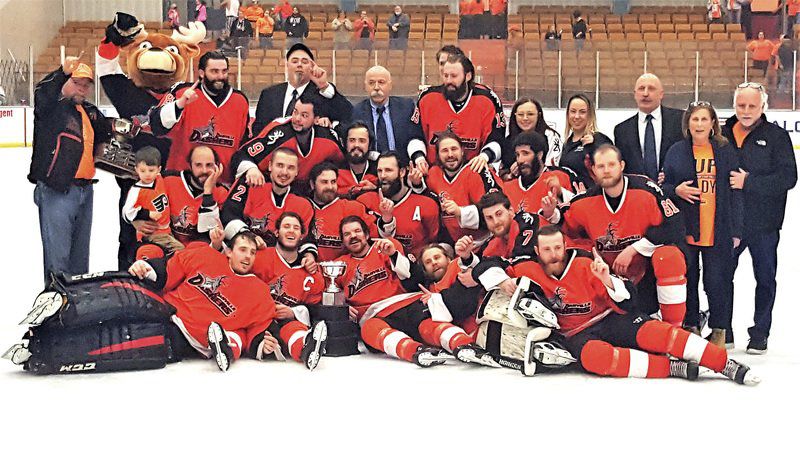
Q: You coached your son in the FHL and won a championship with them as well. How was that and does the father son duo help you in anyway or did it help your son perform better in any way?
A: Winning a championship in Danville was great considering i haven’t won a championship coaching any other teams. The fact that i was able to win it with my son on the team was a dream come true. I think the father son duo world pretty good as i probably get on him harder than others because I’ve always wanted to make sure he’s not messing up anything
(CommercialNews.com)
Q: A lot of famous players and coaches who have retired from hockey don’t usually stay intact with the game still. Do you still keep up to date on hockey?
A: Since I retired, I try not to bother my wife too much with watching or talking about hockey games but we still watch our son play in the pros. If I have some free time, I will usually try to catch up on what is going on around the league. It is hard watching it sometimes because it does make me miss the game and want to continue to stay with coaching but I know it’s time to be with my wife more since I have devoted most of my life to the game of hockey.
 Mike Heverly Digital Hockey Magazines Blog